
Thank you. Your free guide is on its way.
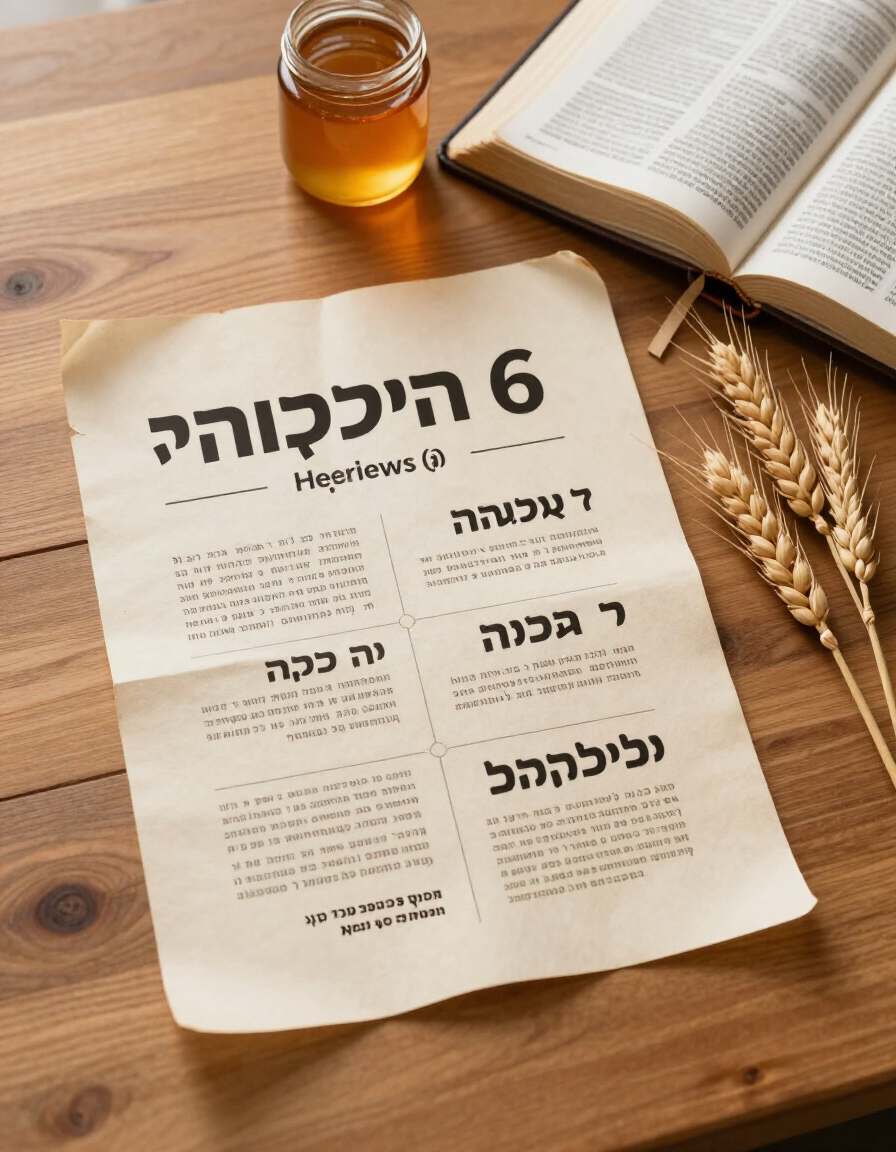
Discover the Six Foundations of Hebrews 6
A free visual study guide to help you understand the Hebraic roots of biblical maturity — and why these foundations still matter for your faith today.
Enter your name and email below and I'll send your free guide straight to your inbox.
No spam, ever. Unsubscribe at any time. I send teaching updates and new resources — never clutter.
ABOUT THIS RESOURCE
Why I Created This Guide
While writing Milk of the Word, I noticed that Hebrews 6:1-2 lists six foundational doctrines that the early church considered essential, yet most modern believers have little framework for understanding them in their Hebraic context. I created this guide to help bridge that gap with clarity, warmth, and a practical path forward.
This guide reflects my broader mission of helping Christians read Scripture as its original audience would have understood it. It is a companion to the book, but it also stands completely on its own as a starting point for anyone curious about the Hebraic foundations of faith.

What's Inside
- The six foundational teachings named in Hebrews 6:1-2
- The Hebraic meaning behind each foundation
- How the early church understood these doctrines
- How each foundation builds on the one before it
- A reading prompt to take each concept deeper in Scripture
- How this connects to the framework in Milk of the Word
WHAT YOU'LL DISCOVER
Six Foundations. One Coherent Framework.
This free guide walks you through the six foundational doctrines of Hebrews 6:1-2 and reveals why the early church considered them inseparable. Whether you're new to Bible study or have been studying for decades, these insights will reshape the way you read the New Testament.
Repentance from Dead Works
In a Hebraic frame, dead works are not only obvious sin but religious activity disconnected from living faith. This foundation clarifies the posture of the heart before any other doctrine is built.
Faith Toward God
This is not generic belief but covenant trust rooted in Israel's language of faithfulness. Seeing the Hebrew idea of emunah changes how this phrase is lived, not just defined.
The Doctrine of Baptisms
The plural is intentional and points to multiple immersions and ritual cleansings familiar in the Hebrew world. The early church referenced them together because they carried a shared theological logic.
Laying On of Hands
This practice is more than ceremony and carries themes of blessing, commissioning, and identification. In its first-century setting, it communicated transmission and belonging with remarkable depth.
Resurrection of the Dead
This doctrine is anchored in the Jewish hope of bodily resurrection and the renewal of creation. It resists the idea of escape and instead announces God's faithfulness to redeem the whole person.
Eternal Judgment
The Hebrew view of justice is covenantal, moral, and deeply relational rather than abstract. This foundation is sobering, yet it also reveals the hopeful integrity of God's final purposes.
Thank you. Your free guide is on its way.
A NOTE FROM JANE
You're Welcome Here
Whether you discovered this page through my book, a friend's recommendation, or simply a search for answers about Hebrews 6, I'm genuinely glad you're here. This guide is my gift to you as a fellow student of Scripture.
When you sign up, you'll receive the Six Foundations of Hebrews 6 guide immediately. You'll also join my newsletter, where I share teaching updates, new articles on the Hebraic foundations of Scripture, and first notice of upcoming resources — including study guides, reading plans, and future courses. I write as a teacher and as a fellow learner. You'll never feel talked at.
No spam, ever. I respect your inbox. Unsubscribe anytime.